If you've ever Googled "how to earn income from stocks," you've seen the ads for covered call ETFs—QYLD, XYLD, JEPI, and a growing list of copycats. They promise 10% to 12% yields, paid monthly, with zero work on your part. Just buy the ETF and the dividends roll in. It sounds perfect. It is not.
I sell covered calls myself. I've been doing it as part of my wheel strategy for years, and every trade is published publicly on Options Cafe. Across 2024, 2025, and 2026 I've booked over $32,900 in documented profit from 212 trades—and a chunk of that is covered call income. So when somebody asks me whether they should buy QYLD or sell their own calls, I can answer with real numbers from both sides of the comparison.
This post is the answer. I'll walk through how covered call ETFs actually work (the parts the marketing leaves out), the math on why their NAVs bleed over time, and how my own returns from selling calls stack up against the ETF route. By the end you'll know which approach fits you—and you'll have the math to defend that choice.
What Covered Call ETFs Actually Do
Let's start with the mechanics, because the marketing doesn't explain them clearly.
QYLD (Global X NASDAQ 100 Covered Call ETF) buys the NASDAQ 100 and sells at-the-money monthly call options against the entire portfolio. Every month, on the third Friday, they close out last month's calls and write new ones at the current index level. The premiums they collect are paid out as monthly distributions.
XYLD (Global X S&P 500 Covered Call ETF) does the exact same thing, just on the S&P 500 instead of the NASDAQ 100.
JEPI (JPMorgan Equity Premium Income ETF) is a different animal. It owns a curated basket of low-volatility S&P 500 stocks and uses something called equity-linked notes (ELNs) to generate option-like income. JEPI is structurally smarter than QYLD—but it's also actively managed, has higher turnover, and behaves differently in a sell-off.
Then there's the new wave: JEPQ, NUSI, RYLD, FEPI, and a dozen others. They all use some flavor of the same playbook—own stocks, sell calls, distribute the premium.
The NAV Erosion Problem (Why Their Share Prices Keep Dropping)
Here's the part the ads bury at the bottom of the prospectus: covered call ETFs that sell at-the-money calls have a structural problem. They give up all of the upside in exchange for the premium. So when the underlying index rallies, the fund's share price doesn't follow it up. But when the index falls, the fund's share price falls right along with it—because the premium they collected is a fraction of the loss.
The result is a chart that goes one direction. Down.
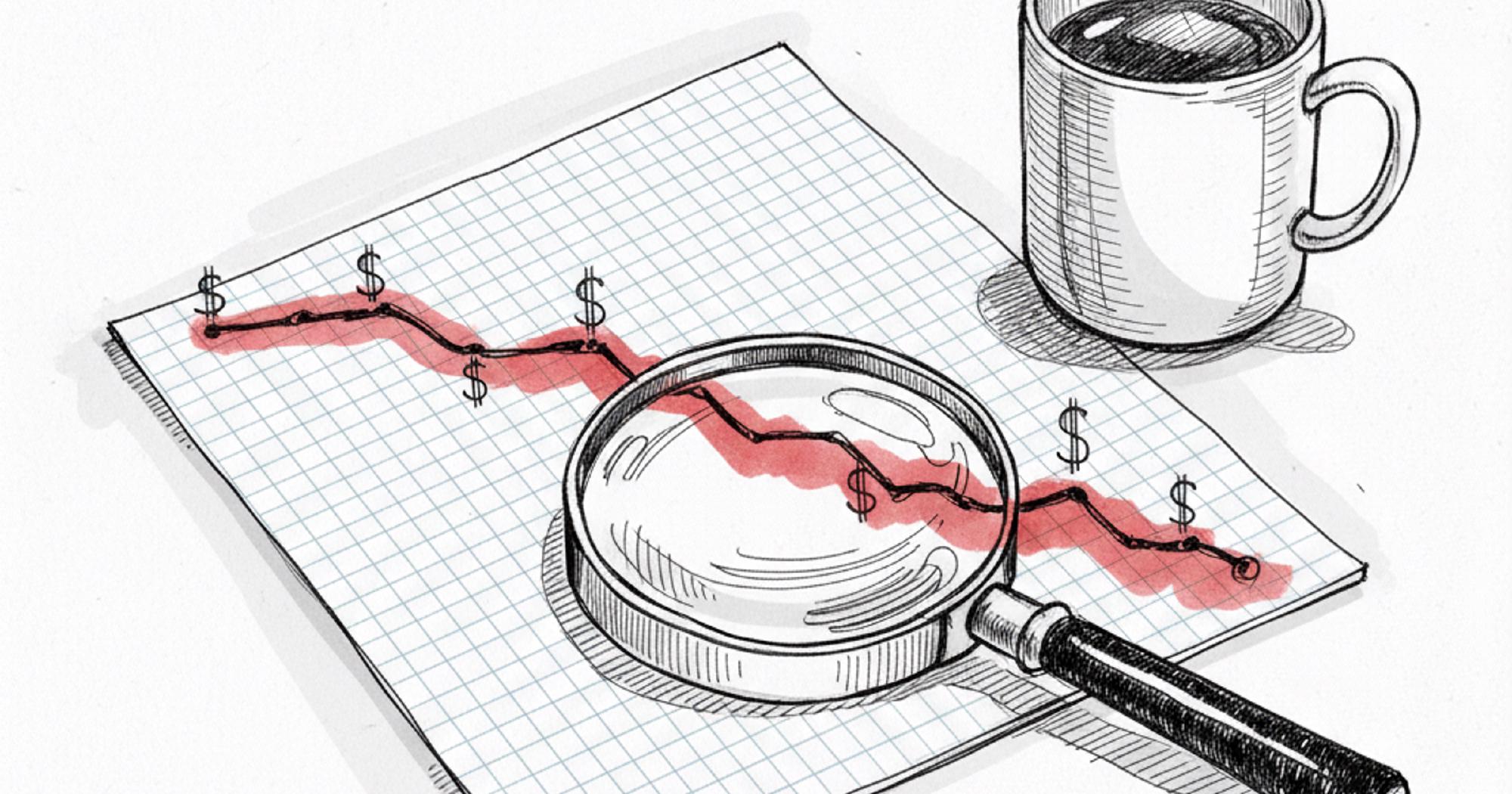
Look at QYLD's history. Since inception in late 2013, the share price has fallen roughly 40%—from around $25 to around $15. Yes, you collected dividends along the way. But a meaningful portion of those "dividends" was classified by the IRS as a return of capital. Translation: the fund was handing you back your own money and calling it income.
XYLD has the same structural issue. JEPI is somewhat better because it doesn't fully cap upside, but it still underperforms the S&P 500 in any rising market.
Total Return: The Number That Actually Matters
Yield is a marketing number. Total return is what determines how much money you actually have at the end of the year. Total return includes price changes, dividends, distributions, and reinvestment.
Here's the rough total return picture for the most popular covered call ETFs over a 10-year window through early 2026:
| Fund | Quoted Yield | Approx. 10-Yr Total Return (Annualized) | Same Period Benchmark |
|---|---|---|---|
| QYLD | ~12% | ~7% | QQQ ~17% |
| XYLD | ~10% | ~6% | SPY ~12% |
| JEPI | ~7% | ~9% (since 2020 inception) | SPY ~13% |
Two things jump out. First, the quoted yield is roughly double the actual total return for QYLD and XYLD. The other half of the yield is just NAV erosion catching up to you. Second, every one of these funds underperformed its underlying index. If your goal was income from a particular index, just owning the index and selling 4% of your shares per year would have produced more total return with more flexibility.
What I Actually Earn Selling My Own Calls
Now let's flip to my side of the comparison. I sell covered calls as the second phase of the wheel strategy. I get assigned shares from a cash-secured put, then I sell calls against those shares until they get called away. Rinse and repeat.
Here's the documented record from my public wheel strategy results:
| Year | Total Profit | Trades | Avg Profit / Trade |
|---|---|---|---|
| 2024 | $4,652 | 28 | $166 |
| 2025 | $19,791 | 124 | $160 |
| 2026 (YTD) | $8,518 | 60 | $142 |
These numbers include both the cash-secured put leg and the covered call leg of the wheel. On a roughly $50,000 to $80,000 portfolio (depending on how much capital is deployed in any given week), 2025 produced about a 25% return on the deployed capital. That's not a hypothetical—every trade is timestamped and public.
Compare that to QYLD's ~7% total return, or even JEPI's ~9%, and the gap is enormous. I am not an exceptional trader. I follow rules. I pick boring stocks. I sell calls 30 days out at a 30 delta. The reason my returns are higher is structural: I am not capping all of my upside, and I am keeping 100% of the premiums I collect instead of paying a 0.60% expense ratio.
Head-to-Head: Covered Call ETF vs Selling Yourself
Here's the comparison I wish someone had handed me five years ago.
| Factor | Covered Call ETF (QYLD/XYLD) | Selling Your Own Calls |
|---|---|---|
| Effort | Zero. Buy and hold. | ~30 minutes per week. |
| Annual Fees | 0.35% to 0.60% (QYLD: 0.60%) | $0 (broker commissions are typically free or near-free) |
| Strike Selection | Always at-the-money. No flexibility. | Whatever delta and DTE you want. |
| Upside Capture | Almost zero. ATM caps everything. | Partial. OTM strikes leave room to gain. |
| NAV Erosion | Significant. ~40% on QYLD since 2013. | None. You own the underlying. |
| Tax Treatment | Mix of ordinary income and return of capital. Confusing 1099. | Short-term capital gains on premium. Simpler 1099-B. |
| Roll Flexibility | None. ETF rolls on a fixed monthly schedule. | Total. You decide when to roll, take profit, or close. |
| Stock Selection | Whatever the index holds. | You choose stocks you actually want to own. |
| Realistic Total Return | ~6% to 9% annually. | ~15% to 25% if you follow a system. |
Every row in that table favors selling your own calls—except the effort row. That's the whole comparison. You are paying with your time, but the time investment is small and the return on that time is enormous.
The Math at $100,000 Invested
Let me make this concrete. Say you have $100,000 to deploy for income. Here's what that looks like over five years under each approach.
| Path | Annual Total Return | After 5 Years | Total Earned |
|---|---|---|---|
| QYLD | ~7% | $140,255 | $40,255 |
| JEPI | ~9% | $153,862 | $53,862 |
| Selling your own (conservative 15%) | ~15% | $201,136 | $101,136 |
| Selling your own (my actual rate ~25%) | ~25% | $305,176 | $205,176 |
Even at the conservative 15% return that a disciplined wheel-style approach can produce, you double your money in five years. At my actual rate you triple it. The QYLD investor barely keeps up with inflation after taxes.
And don't forget the fee drag. QYLD's 0.60% expense ratio on $100,000 is $600 per year, every year, forever. Over 20 years that's $12,000 paid to the fund manager for the privilege of underperforming the index. Selling your own calls costs you nothing.
Who Should Use Covered Call ETFs (Honestly)
I'm not going to pretend covered call ETFs have zero use case. They do. There's a specific person they make sense for:
- You will absolutely never learn options. Not "I'd like to learn someday." You know yourself, and you know you won't open the textbook. ETF is fine.
- You have a retirement account where you can't sell options. Some employer 401(k) plans don't allow option trading. ETF is your only access to the strategy.
- You're using it as a small portion of a larger income portfolio. A 5% to 10% allocation to JEPI alongside bonds and dividend stocks isn't unreasonable diversification.
- You're elderly or estate-planning. Simplicity matters. A surviving spouse who doesn't trade can hold an ETF without intervention.
If you're none of those people—if you have an IRA or taxable account, you have 30 minutes a week, and you're capable of reading a payoff diagram—there is no good reason to choose the ETF over selling your own calls.
Who Should Sell Their Own Calls

This is most people reading this. If any of these are you:
- You can spend 30 minutes per week on your portfolio. That's it. The whole job is checking expirations, rolling tested strikes, and writing the next month's calls.
- You want better tax treatment. Premium income on stocks you hold is short-term capital gains—the same as ETF distributions, but cleaner and easier to track.
- You want to keep some upside. By selling slightly out-of-the-money calls instead of at-the-money, you participate in modest rallies. The ETFs don't.
- You want to pick stocks you'd own anyway. A QYLD investor owns Apple, Microsoft, and Nvidia by default. Maybe you don't want those at current valuations.
- You want to control the timing of your taxable events. If you have a year you want to defer income, you can stop writing calls. The ETF can't.
Selling your own calls isn't free—you're trading time for return. But the trade is wildly favorable. Thirty minutes a week to convert a 7% ETF return into a 15% to 25% personal return is one of the highest hourly wages in finance.
The "Third Option" Most People Miss
There's a hybrid path I rarely see discussed: do both.
Allocate the bulk of your liquid investing capital to selling your own calls. Take a small slice—say 5% to 15%—and put it in JEPI as a low-touch income sleeve. Why?
- JEPI's distributions hit your account on a predictable monthly schedule, regardless of what the market does. That's useful for budgeting.
- It diversifies your income source. Your active calls might have a slow month. JEPI's algorithm grinds out distributions every month no matter what.
- It scales for you while you're busy. If you take a vacation, get sick, or just don't want to trade for a month, JEPI keeps producing.
This is what I'd do if I were starting over with a larger portfolio than I could realistically manage hands-on. But the core position should be the active strategy, not the ETF.
The Common Objections (And My Answers)
"I don't have $100,000." You don't need it. I started selling covered calls with a portfolio under $20,000. I've written a full guide on running the wheel strategy on a small account. The strategy scales down to whatever stock you can afford 100 shares of.
"I don't have time to monitor positions." Selling 30-day-out covered calls takes about 10 minutes when you open the trade and 10 minutes near expiration. That's it. Total time per trade is under 30 minutes spread across a month. Compare that to actively managing a stock portfolio.
"What if the stock crashes?" Same risk as owning the ETF—or any stock. The premium you collected gives you a small cushion. And selling covered calls on a stock you actually want to own long-term means a drawdown is a buying opportunity, not a panic. The ETF holder has the same crash risk plus the NAV erosion every other year.
"What if my stock gets called away?" Then you keep the premium plus the capital gains up to your strike. That's a winning trade. You re-deploy the cash by selling another cash-secured put and the wheel turns again.
Stocks I'm Currently Selling Calls Against
As of this writing, the call-phase positions in my live wheel portfolio include HIMS, VXX, and IONQ. The rest of my positions are in the put phase—waiting for assignment so I can start selling calls against them.
HIMS has been my biggest covered call winner of the past 18 months: $3,989 in profit across 18 trades. HOOD is right behind it at $3,989 across 16 trades. These are the kinds of stocks I look for—solid businesses with elevated implied volatility that pays me well to underwrite the risk. You can see the full stock picking framework in my dedicated guide.
The Bottom Line
If you're choosing between QYLD and selling your own calls, the answer is almost always: sell your own calls.
Covered call ETFs are not a scam. They do what they say. They sell calls and pay distributions. But the marketing leads people to confuse yield with return, and the structural decision to always sell at-the-money guarantees that NAV erodes over time. You can recreate the strategy yourself, with better strikes, better stock selection, better tax treatment, and zero fees, in about 30 minutes a week.
The real question isn't "which is better." The math settled that. The real question is: are you willing to spend 30 minutes a week to triple your return? If yes, learn to sell your own calls. If no, JEPI is acceptable. QYLD is not.
I publish every wheel trade I take on Options Cafe. If you want to see what the active approach actually looks like in practice—not in a backtest, not in theory—the trade log is public. Watch a few cycles, then decide.
Ready to learn options trading?
Start learning how to successfully trade options to earn monthly income.
Related Topics: Covered Call ETF, QYLD vs Selling Covered Calls, XYLD, JEPI, Covered Call ETF vs Selling Own Calls, Covered Call Strategy, Options Income Strategy, Wheel Strategy, Passive Income Options, NAV Erosion