If you own stocks and you're not selling covered calls against them, you're leaving money on the table. That's not hype—it's math. Every week that shares sit in your account without a call sold against them is a week of premium you didn't collect. I know because I've been selling covered calls as part of my wheel strategy for years, and those premiums have added up to over $31,000 in documented income from 201 trades.
This guide is everything I've learned about selling covered calls—not from textbooks, but from actually doing it with real money. I'll share exactly how I pick strikes, when I roll, and when I just let shares get called away. All backed by real trades I've published on Options Cafe.
What Is a Covered Call?
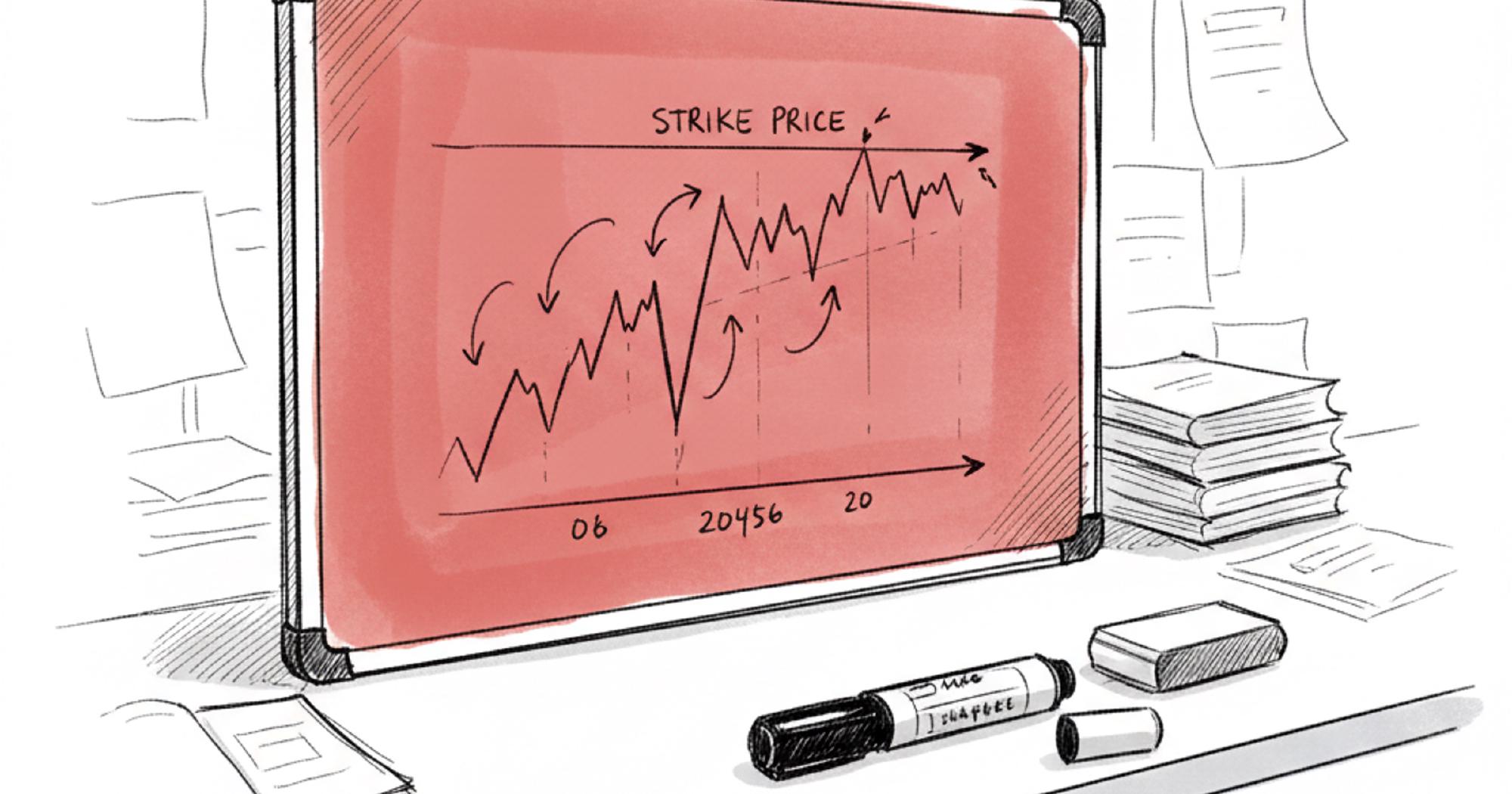
A covered call is one of the simplest options strategies that exists. Here's the setup: you own 100 shares of a stock, and you sell a call option against those shares. That call gives the buyer the right to purchase your stock at a specific price (the strike price) before a specific date (the expiration). In exchange for granting that right, you collect a premium upfront.
The "covered" part is key. You already own the shares. If the buyer exercises the call, you simply hand over shares you already have. There's no naked risk, no margin call surprise. That's what makes this strategy accessible to almost any stock investor.
Here's a concrete example:
- You own 100 shares of ETSY at $63.00
- You sell a $67.50 call expiring in 21 days
- You collect $1.80 per share ($180 total premium)
Now one of two things happens:
Scenario 1: ETSY stays below $67.50. The call expires worthless. You keep your shares AND the $180 premium. That's a 2.9% return on your position in 21 days. Annualized, that's over 50%. You can immediately sell another call and collect more premium.
Scenario 2: ETSY rises above $67.50. Your shares get "called away"—you sell them at $67.50 regardless of how high the stock goes. You keep the $180 premium plus the $450 in capital gains ($67.50 - $63.00 = $4.50 × 100). That's a total profit of $630 on a $6,300 position in 21 days. Not a bad outcome.
The only real downside? If ETSY rockets to $80, you still sell at $67.50. You miss the upside beyond your strike. That's the tradeoff: you cap your upside in exchange for guaranteed income today.
Why I Sell Covered Calls (The Real Reason)
Most guides talk about covered calls as a "conservative strategy for income." That's true, but it undersells why this matters. Let me give you the real reason I sell covered calls: stocks spend most of their time going sideways.
Think about it. Even great companies have extended periods where the stock doesn't do much. If you're a buy-and-hold investor during those stretches, you're earning nothing. Your money is just sitting there. Covered calls turn those dead periods into income.
In my wheel strategy, covered calls are Phase 2. After I get assigned shares through selling cash-secured puts, I immediately start selling calls against those shares. This means I'm collecting premium in both directions—before I own the stock and while I own it.
Right now, I'm actively selling covered calls on ETSY, SMMT, and VXX as part of my wheel positions. These aren't theoretical trades—you can see every one of them on my results page.
How to Sell Your First Covered Call: Step by Step
Here's exactly how I approach every covered call trade. This is the system I use, not a simplified version for beginners.
Step 1: Own at Least 100 Shares
Each options contract represents 100 shares. You need to own at least 100 shares of the stock to sell one covered call. If you own 300 shares, you can sell up to 3 contracts. I never sell more contracts than I have shares to cover—that would make it a naked call, which is a completely different (and much riskier) strategy.
Step 2: Choose Your Strike Price
This is the most important decision. The strike price determines how much premium you collect and how likely you are to have your shares called away.
My rule: sell strikes 5-15% above the current stock price. This gives me a comfortable buffer. If the stock rises a little, I keep my shares and the premium. If it rises a lot, I profit from both the capital gain and the premium.
| Strike Distance | Premium | Probability of Assignment | Best For |
|---|---|---|---|
| 2-5% OTM | High | ~30-40% | Maximizing income, OK with selling shares |
| 5-10% OTM | Moderate | ~15-25% | Balanced approach (my sweet spot) |
| 10-15% OTM | Lower | ~5-15% | Want to keep shares, smaller income |
| 15%+ OTM | Very low | <5% | Barely worth the commission |
Step 3: Choose Your Expiration Date
I almost always sell calls with 14-30 days until expiration (DTE). Here's why: theta decay (time value erosion) accelerates in the final 30 days. That means you collect the most premium per day in that window.
Selling 45+ DTE calls gives you more total premium, but the per-day value is lower, and you're exposed to more risk of a big price move. Shorter than 14 DTE and the premium is usually too thin to be worth it.
Step 4: Sell the Call
In your broker, select "Sell to Open" on a call option at your chosen strike and expiration. Always use limit orders, not market orders. I typically aim for the mid-price between the bid and ask. If it doesn't fill in a few minutes, I'll adjust toward the bid slightly.
Step 5: Manage the Position
Once the call is sold, I set a mental framework for three outcomes:
- Stock stays flat or drops slightly: Call expires worthless. I keep shares and premium. Sell another call next cycle.
- Stock rises past the strike: Shares get called away. I take the profit and move on. In the wheel strategy, this means I go back to Phase 1—selling cash-secured puts to re-enter the stock.
- Stock drops significantly: The call expires worthless (good), but my shares lost value (bad). The premium offsets some of the loss. I evaluate whether to sell another call at a lower strike or wait for recovery.
When to Roll a Covered Call (and When to Let It Go)
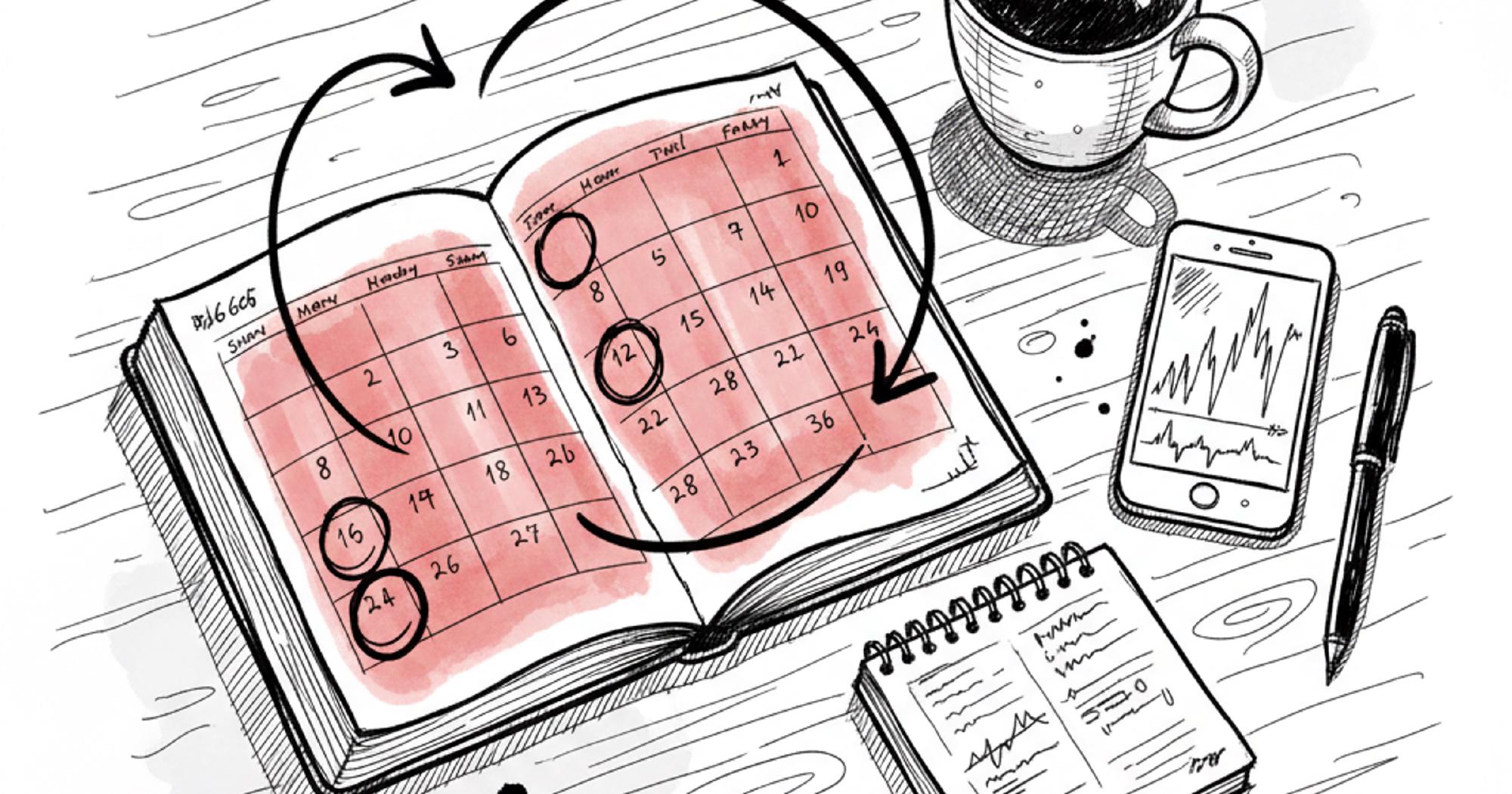
Rolling is one of the most misunderstood aspects of selling covered calls. Here's what it means: you buy back the call you sold and simultaneously sell a new call at a later expiration (and sometimes a different strike). You're essentially extending the trade.
My rolling rules are simple:
- Never roll for a debit. If rolling would cost me money (net debit), I don't do it. The whole point of covered calls is collecting premium. If rolling costs more than it brings in, I'm better off letting the shares get called away and moving on.
- Maximum 2 rolls per position. If I've rolled twice and the stock is still against me, it's time to accept the outcome. Endless rolling is how people turn small losses into big ones.
- Roll early, not at expiration. If a stock is approaching my strike with a week left, I evaluate rolling then—not on expiration Friday when there's no time value left.
A Real Rolling Example
Here's how rolling plays out in practice. Say I own SMMT at $60 and sold a $65 call for $2.00. A week before expiration, SMMT has climbed to $64.50. The call is now worth $1.50 and there's real risk of assignment.
I can roll by buying back the $65 call for $1.50 and selling a $67.50 call 3 weeks out for $2.50. Net credit: $1.00. I've pushed the strike higher, collected an additional dollar of premium, and given myself more room. But if I had to pay $3.00 to buy back the call and could only sell the next one for $2.50? That's a net debit. I'd let the shares go.
Covered Call ETFs vs. Selling Your Own Calls

You've probably heard of funds like QYLD, XYLD, and JEPI. These ETFs sell covered calls for you, making them the ultimate "set it and forget it" approach to options income. But there's a catch most people miss: NAV erosion.
Covered call ETFs, particularly QYLD and XYLD, tend to lose share value over time. They sell at-the-money calls that cap all upside, and the "income" you receive is partially a return of your own capital. QYLD has lost roughly 40% of its share price since inception while paying a 12% yield. That's not income—it's a slow liquidation of your investment.
| Factor | Covered Call ETFs | Selling Your Own Calls |
|---|---|---|
| Time Required | Zero—fully passive | 30-60 min/week |
| Fees | 0.60% annually (QYLD) | $0.50-$1.00 per trade |
| Strike Control | None—ETF decides | Full control |
| Upside Capture | Almost none (ATM calls) | Retain 5-15% upside |
| NAV Erosion | Significant over time | None |
| Tax Efficiency | Ordinary income distributions | Short-term gains, but you control timing |
| Learning Required | Minimal | Moderate (this guide gets you there) |
My take: If you're willing to spend 30 minutes a week, sell your own calls. The control over strike selection alone makes a massive difference. ETFs sell at-the-money calls that cap all your upside. I sell 5-10% out of the money, which means I keep most of the stock's growth AND collect premium.
I break down the full head-to-head with historical ETF data in my covered call ETFs vs. selling your own calls comparison.
That said, JEPI is a better option than QYLD if you insist on the passive route. It uses equity-linked notes instead of pure call writing, which gives it better total return characteristics. But it's still not as good as doing it yourself.
My Real Covered Call Results
I don't trade covered calls in isolation—they're part of my wheel strategy. So my results combine the put-selling phase and the call-selling phase. Here's the big picture:
| Year | Total Profit | Trades |
|---|---|---|
| 2024 | $4,652 | 28 |
| 2025 | $19,718 | 124 |
| 2026 (YTD) | $7,051 | 49 |
| Total | $31,421 | 201 |
My top performing wheel stocks include TSLA ($4,055 profit), HIMS ($3,916), HOOD ($3,832), and SMMT ($2,353). Each of these went through the full wheel cycle—I sold puts until assigned, then sold covered calls until the shares were called away, collecting premium in both phases.
Not every trade is a winner. INTC cost me $556 across 3 trades. That's the reality of trading. But the wins far outpace the losses because covered calls are inherently a high-probability strategy—most options expire worthless, which means most of the time you keep your shares and the premium.
Common Covered Call Mistakes (I've Made Most of These)
Mistake #1: Selling Calls on Stocks You Don't Want to Own
This sounds obvious, but I see it constantly. People buy a stock just because it has high option premiums, then panic when it drops 20%. High premiums exist for a reason—the market expects big moves. If you wouldn't hold the stock for a year without selling calls, don't buy it for the premiums alone.
Mistake #2: Selling Calls Before Earnings
Earnings reports can move stocks 10-20% overnight. If the stock gaps up past your strike, you've capped your gains at exactly the wrong moment. I avoid selling covered calls within 2 weeks of an earnings report. If I already have a call on, I close it before earnings even if it means taking a small loss.
Mistake #3: Setting Strikes Too Close to the Current Price
Yes, at-the-money calls pay the most premium. But you're almost guaranteed to have your shares called away on any meaningful move. I learned this the hard way early in my trading. Now I give myself 5-10% of breathing room. The slightly lower premium is worth the flexibility.
Mistake #4: Rolling Endlessly
Some traders refuse to let their shares go. They'll roll a covered call 5, 6, 7 times, sometimes for debits, just to keep the stock. This turns a winning strategy into a losing one. My rule: two rolls maximum. After that, it's time to accept the market's verdict.
Mistake #5: Ignoring Ex-Dividend Dates
If you sell a covered call on a dividend-paying stock and the stock goes ex-dividend, there's a meaningful chance of early assignment. The call buyer may exercise early to capture the dividend. Always check the ex-dividend date before selling calls. If it falls within your expiration window, either sell after the ex-date or factor the dividend into your strike selection.
Covered Calls and the Wheel Strategy: The Complete System
Here's something most covered call guides won't tell you: covered calls are most powerful when they're part of a bigger system. That system is the wheel strategy.
The wheel works like this:
- Phase 1 – Sell cash-secured puts. Collect premium while waiting to buy a stock at a discount. (Full guide here.)
- Phase 2 – Get assigned. You now own shares at a price you chose, minus the premium you collected.
- Phase 3 – Sell covered calls. Collect premium on shares you own until they get called away.
- Phase 4 – Shares called away. Take the profit. Go back to Phase 1.
The beauty is that you're collecting premium in both phases. You get paid to buy the stock and you get paid while holding it. The wheel turns a single strategy (covered calls) into a perpetual income machine.
Right now, I have 7 active wheel positions. ETSY, SMMT, and VXX are in the covered call phase. RKLB, UNG, RIVN, and RKT are in the put-selling phase. When those get assigned, I'll start selling calls on them too.
Who Should (and Shouldn't) Sell Covered Calls
Covered calls are great if you:
- Own stocks you plan to hold for the medium to long term
- Want to generate income from stocks that are going sideways
- Are comfortable with the possibility of your shares being sold at the strike price
- Can dedicate 30 minutes a week to managing positions
- Have at least $2,000 in a stock (100 shares of a $20 stock)
Covered calls are NOT ideal if you:
- Think a stock is about to make a huge move up (you'll cap your gains)
- Aren't comfortable with options basics—learn those basics first
- Want a completely passive approach (consider JEPI instead)
- Only own fractional shares (you need 100-share lots)
How Much Money Do You Need to Sell Covered Calls?
You need 100 shares to sell one covered call. That means your capital requirement depends entirely on the stock price. If you're working with a smaller account around $5,000, focus on stocks under $25 per share—tickers like SOFI, RIVN, and RKT that I actively trade on the wheel.
With $5,000, you could own 100 shares of a $20 stock and still have $3,000 in reserve. That's enough to start selling covered calls and seeing real income. At $10,000, you can diversify across 2-3 positions.
And here's a tip most people miss: covered calls work beautifully in an IRA. In a Roth IRA, the premium you collect is completely tax-free. In a traditional IRA, it's tax-deferred. Most brokers allow covered calls in retirement accounts since they're considered a conservative strategy. If you're going to sell calls anywhere, a Roth IRA is the best place to do it.
Finding Stocks for Covered Calls
I built a free wheel options screener that helps you find stocks with good option premiums for both cash-secured puts and covered calls. You can filter by price, premium yield, delta, and days to expiration. It's the same tool I use to find my own trades.
When screening for covered call candidates, look for:
- Stocks you understand and would hold. This isn't optional. You need conviction in the stock itself.
- Implied volatility in the 30-60% range. Too low and premiums aren't worth it. Too high and the stock is probably too risky.
- Liquid options markets. Tight bid-ask spreads mean you won't lose money getting in and out. Stick to stocks with high option volume.
- Stocks in a range or mild uptrend. Covered calls work best when stocks move sideways or slightly up. Avoid selling calls during confirmed downtrends.
My best stocks for the wheel strategy guide covers my current top picks in detail, including why I trade each one.
Covered Calls and Taxes: What You Need to Know
Premium collected from covered calls is taxed as short-term capital gains regardless of how long you've held the underlying shares. That means it's taxed at your ordinary income rate, which could be 22-37% depending on your bracket. (See my options trading taxes guide for the full picture.)
One important detail: selling a covered call can disqualify your shares from long-term capital gains treatment. If you sell an in-the-money call, the IRS considers it a "qualified covered call" only under certain conditions. This rarely matters for how I trade (I sell out-of-the-money calls), but it's worth knowing.
The simplest way to eliminate the tax drag? Trade covered calls in a Roth IRA. All gains—both premium income and capital gains—are 100% tax-free. This is arguably the single most impactful optimization you can make.
Frequently Asked Questions
What happens if the stock drops sharply after I sell a call?
The call expires worthless (you keep the premium), but your shares lost value. The premium partially offsets the loss. For example, if your stock drops $3 per share but you collected $1.50 in premium, your net loss is only $1.50 per share instead of $3. The covered call reduces your cost basis in the stock. (More on lowering your stock basis using options.)
Can I close a covered call early?
Absolutely. You can "Buy to Close" the call at any time before expiration. If the stock drops and the call loses most of its value, I often buy it back for a few cents and then sell a new one. This frees up the position and lets me start a new cycle.
How much can I realistically make selling covered calls?
It depends heavily on the stock, implied volatility, and how far out of the money you sell. As a rough guide, selling calls at 5-10% OTM on moderate-volatility stocks generates about 1-3% per month. On a $50,000 portfolio, that's $500-$1,500 per month. My actual results have averaged above that because I focus on higher-volatility names, but I've also had losing months. It's not a guaranteed paycheck.
Should I sell covered calls on every stock I own?
No. I only sell calls on stocks where I'm comfortable with the possibility of having them called away. If I believe a stock is about to break out significantly, I skip the call and let it run. Selling calls on a stock that doubles means you miss the biggest gain of the year. Be selective.
Is there a minimum account size?
You need enough to buy 100 shares plus some buffer. With stocks like SOFI around $15, that's $1,500 for 100 shares. I'd recommend at least $2,000-$3,000 to start, with $5,000-$10,000 being more practical for meaningful income. Check out my wheel strategy small account guide for specific allocation strategies.
Can I sell covered calls in an IRA?
Yes. Most brokers allow covered calls in retirement accounts because they're considered a conservative strategy. In a Roth IRA, the premium you collect is completely tax-free; in a traditional IRA, it's tax-deferred. If you're going to sell calls anywhere, a Roth IRA is the most tax-efficient place to do it.
— Spicer
Ready to learn options trading?
Start learning how to successfully trade options to earn monthly income.
Related Topics: Covered Calls, Covered Call Strategy, How to Sell Covered Calls, Selling Covered Calls for Income, Covered Call Income, Rolling Covered Calls, Options Income Strategy, Wheel Strategy, Premium Selling, Options Trading