If you're searching for an honest guide to options trading for beginners, you've probably already noticed something: almost every guide teaches you to buy calls and puts. Pick a direction, pay a premium, and hope the stock moves your way before the option expires. That's how I started too—and it's exactly why I lost money for years before figuring out a better way.
I trade options full-time and publish every single trade in the open. My approach is the opposite of what most beginner guides teach: instead of buying options and betting on direction, I sell options and collect income. It's the difference between buying a lottery ticket and being the one who sells it. This guide will show you why I teach selling premium first, what you actually need to know before your first trade, and how to place that trade step by step.
Why Most "Options Trading for Beginners" Guides Teach It Backward
Open any beginner options course and the first thing they teach is buying a call option. The pitch is seductive: "Control 100 shares of a stock for a fraction of the price. If the stock goes up, you make a fortune." It sounds like leverage with limited risk.
Here's the problem. When you buy an option, you are paying for the privilege of being right about three things simultaneously:
- Direction — the stock has to move the way you predicted.
- Magnitude — it has to move far enough to cover what you paid.
- Timing — it has to do all of that before your option expires.
Get any one of those wrong and you lose. The stock can go up and you can still lose money if it didn't move fast enough, because every day that passes, your option loses value. That daily erosion is called time decay, and when you buy options, it's bleeding you the entire time you hold the position.
When you sell an option, you flip every one of those forces to your side. You collect the premium up front. Time decay works in your favor—every day that passes puts money in your pocket. And you don't even need to be right about direction; you just need the stock to not crash through your strike price. You can be wrong about where the stock goes and still make money.
This is the entire philosophy behind Options Cafe. I'm not predicting the next big move. I'm running an income business where I sell insurance to speculators and collect their premiums. It's less exciting, but it's far more repeatable—and the numbers prove it.
My Story: I Blew Up Accounts Buying Options Before I Learned to Sell Premium
I've been trading for over 20 years. I want to be transparent about how I started, because it's the exact mistake most beginners are about to make.
In my early years, I did what every beginner does. I bought calls on stocks I was excited about. I bought puts when I thought the market was going to crash. I chased earnings plays, buying options the day before a report hoping for a big pop. Occasionally I'd hit a winner and feel like a genius. But the losses kept piling up, slowly and then quickly, until I'd given back everything—and more.
The pattern was always the same. I'd be right about the stock going up, but the move was too small to overcome the premium I paid plus the time decay. Or I'd be right but a week too early. Buying options felt like gambling, because it was.
The turning point came when I discovered premium selling. Instead of buying that worthless-most-of-the-time lottery ticket, I started selling it to other people. My win rate flipped almost overnight. Not because I got smarter about predicting stocks, but because I stopped trying to predict them at all. Today my core strategy—the wheel strategy—has generated $33,000+ in documented profit across 217 trades since I started publishing every position, including $19,791 in 2025 alone across 124 trades.
That's the journey I want to save you from repeating. Start where it took me years to arrive: selling premium for income.
5 Things to Understand Before Your First Options Trade
Before you place a single trade, you need a working understanding of five concepts. You don't need a finance degree. You need these five things, in plain English.
1. Calls vs. Puts
An option is a contract tied to 100 shares of a stock. There are only two types:
- A call option gives the buyer the right to buy 100 shares at a set price.
- A put option gives the buyer the right to sell 100 shares at a set price.
For every buyer, there's a seller on the other side. As a premium seller, you're going to be that seller—collecting the cash the buyer pays. Don't worry about memorizing complex combinations yet. As a beginner selling premium, you'll mostly care about selling puts.
2. The Strike Price
The strike price is the agreed-upon price in the contract. If you sell a put with a $15 strike on a stock, you're agreeing to buy 100 shares at $15 if the buyer chooses to exercise. The strike you choose determines both how much premium you collect and how much risk you take. Lower strikes (further below the current price) are safer but pay less. This is the single most important decision you'll make on each trade.
3. Expiration Date
Every option has an expiration date. After that date, the contract is gone. As a seller, expiration is your finish line—if the option expires worthless (which is what you want), you keep 100% of the premium. As a beginner, I recommend selling options that expire in 30 to 45 days. That window gives you the best balance of premium income and time decay without the wild swings of weekly options.
4. The Premium
The premium is the cash the buyer pays you to take on the obligation. It's quoted per share, so you multiply by 100. If a put shows a premium of $0.50, you collect $50 per contract (0.50 × 100). That money hits your account the moment the trade fills, and it's yours to keep as long as you manage the position. This is your income.
5. Assignment
Assignment is the word that scares beginners most, so let me defuse it. Assignment simply means the buyer exercised their right, and now you have to fulfill your end. If you sold a cash-secured put and get assigned, you buy 100 shares at the strike price—using cash you already set aside for exactly this.
Here's the mindset shift: assignment isn't a disaster, it's part of the plan. You only sell puts on stocks you'd be happy to own. If you get assigned, you now own a quality stock at a discount, and you can start selling covered calls against it. That's the wheel strategy in a nutshell.
The Two Greeks Beginners Actually Need: Theta and Delta
Options have a set of risk measures called "the Greeks," and most beginner guides drown you in all of them. As a premium seller starting out, you only need to understand two. I cover all of them in depth in my guide to how option Greeks affect the premium you trade, but here's the beginner version.
Theta — Your Best Friend as a Seller
Theta measures time decay—how much value an option loses each day, all else being equal. When you buy options, theta is your enemy; it eats your position a little every day. When you sell options, theta is your paycheck. Every day that passes, the option you sold is worth a little less to buy back, which means you're a little more profitable. You literally make money while you sleep, as long as the stock cooperates.
Delta — Your Probability Gauge
Delta tells you roughly how much an option's price moves when the stock moves $1. But there's a beginner shortcut that's far more useful: delta approximates the probability the option expires in-the-money. A put with a delta of 0.20 has roughly a 20% chance of being assigned—meaning an 80% chance you keep the premium free and clear. When I sell puts, I often target a delta around 0.20 to 0.30, which stacks the odds heavily in my favor.
That's it. Theta and delta. Master those two and you understand more than most people who've been buying options for years.
Setting Up Your Account: Brokers and Options Approval Levels
Before you can sell premium, you need a brokerage account approved for options. Here's what beginners need to know.
Choosing a Broker
| Broker | Best For | Notes |
|---|---|---|
| Charles Schwab | Beginners | Includes the powerful thinkorswim platform. Great education and customer support. |
| Fidelity | All-around investors | Excellent for combining long-term investing with options. Solid mobile app. |
| Interactive Brokers | Cost-conscious traders | Lowest commissions and margin rates. Steeper learning curve for beginners. |
| tastytrade | Premium sellers | Platform built specifically for options sellers. Cheap closing commissions. |
Any of these work. If you're brand new, I lean toward Schwab (thinkorswim) for the education and the paper-trading tools. If you know you want to sell premium seriously, tastytrade is purpose-built for it. If you want to compare on cost, see my guide to the cheapest broker for options trading.
Options Approval Levels
When you apply for options trading, your broker assigns you an approval level based on your experience and financial situation. Levels vary slightly by broker, but they generally look like this:
- Level 1: Covered calls and cash-secured puts. This is all a premium-selling beginner needs.
- Level 2: Buying calls and puts (long options).
- Level 3: Spreads (defined-risk strategies like credit spreads).
- Level 4: Naked options (the highest risk—you won't need this).
The good news for premium sellers: the strategies I recommend you start with—cash-secured puts and covered calls—live at the lowest approval level. You don't need fancy permissions to start generating income. When you apply, be honest about your experience but make clear your goal is income generation through cash-secured puts and covered calls.
Your First Trade: Selling a Cash-Secured Put, Step by Step
This is the trade I recommend every beginner start with. A cash-secured put is the foundation of everything I do. Here's exactly how to place one.
Step 1: Pick a Stock You'd Be Happy to Own
The golden rule of selling puts: only sell them on stocks you actually want to own at the strike price. If you get assigned, you're buying the stock—so pick a quality company you understand. For small accounts, I trade affordable stocks under $25 like SOFI, RIVN, and Ford. Pick something where you'd genuinely be fine owning 100 shares.
Step 2: Choose Your Strike Price
Select a strike 5% to 15% below the current stock price. This is your cushion—the stock can drift down and you still win. A strike further out of the money is safer but pays less premium. As a beginner, err toward safety. Aim for a strike with a delta around 0.20 to 0.30.
Step 3: Choose Your Expiration (30–45 Days Out)
Pick an expiration date 30 to 45 days away. This is the sweet spot where time decay accelerates in your favor without exposing you to the rapid-fire risk of weekly options.
Step 4: Make Sure You Have the Cash
"Cash-secured" means you set aside enough cash to buy 100 shares at the strike. If your strike is $15, you need $1,500 sitting in your account. This is why CSPs are beginner-safe: there's no margin, no surprise leverage, just cash you already have backing the trade.
Step 5: Sell to Open and Collect Your Premium
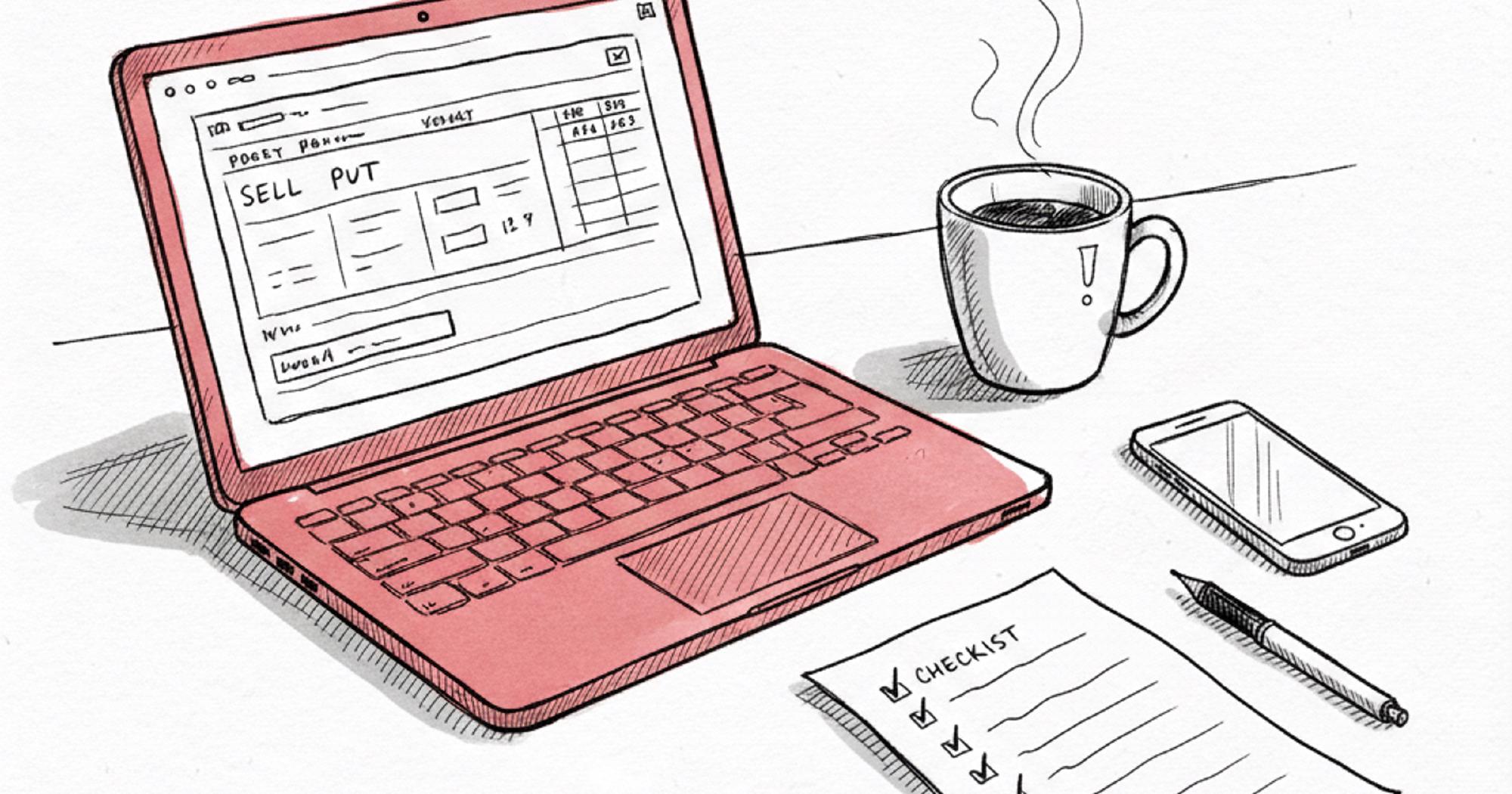
On your broker's order ticket, you'll choose "Sell to Open" on the put you selected. The moment it fills, the premium lands in your account. Now you wait.
Step 6: Manage the Trade
Set a profit target: I close most of my puts when they hit 50% of the maximum premium. If you sold a put for $50 and you can buy it back for $25, you've captured half the profit with much less risk—take it and move on. If the stock drops near your strike, you can roll the position or simply accept assignment and start selling covered calls.
A Real Example: Selling a Put on a $15 Stock
Let's put actual numbers to it so you can see how a single trade plays out. Say a stock you'd be happy to own is trading at $16.50, and you sell the $15 put (about 9% below the current price) expiring in 35 days, collecting a premium of $0.45.
| Detail | Value |
|---|---|
| Cash secured (100 × $15) | $1,500 |
| Premium collected (0.45 × 100) | $45 |
| Return if it expires worthless | 3.0% in 35 days |
| Annualized (if repeated) | ~31% |
If the stock stays above $15 through expiration, the put expires worthless and you keep the full $45—a 3% return on your secured cash in about five weeks. Repeat that monthly and the annualized math is genuinely strong. More likely, you follow my rule and buy the put back at $0.22 once it's worth half, locking in roughly $23 and freeing your capital to start the next trade early. That's the entire income engine, one small trade at a time.
What Actually Happens If You Get Assigned
Beginners lose sleep over assignment, so let's walk through it with real numbers and show why it's not the catastrophe you've been led to believe. Picking up our $15 put example: imagine the stock drops and closes at $14 on expiration day. You get assigned—you buy 100 shares at $15 for $1,500.
But remember, you already collected $45 in premium. That lowers your effective cost basis to $14.55 per share ($15.00 − $0.45). You now own a stock you wanted anyway, at a discount to where you sold the put.
Now you flip to the second half of the wheel and sell a covered call. You sell the $16 call, 30–45 days out, and collect another $0.40 ($40). Two outcomes:
- The stock rises above $16 and your shares are called away. You sell at $16, pocketing the $1 per share gain ($100) plus both premiums ($45 + $40 = $85). Total profit: $185 on roughly $1,500—about 12%—and you're back to cash, ready to sell another put.
- The stock stays below $16. You keep the $40, keep your shares, and sell another covered call next month. You keep collecting income on the stock you own until it eventually gets called away.
That's the full turn of the wheel: sell a put, get assigned, sell covered calls, get called away, repeat. Assignment isn't the moment the trade goes wrong—it's the moment the strategy moves to phase two. Once you internalize that, the fear evaporates and you can trade calmly.
How Much Time Does Options Trading Actually Take?
One of the biggest myths about options trading is that it requires staring at screens all day. For premium selling, that's simply not true. Because I sell 30–45 day options and only adjust when something hits a profit target or moves against me, my active management is measured in minutes per week, not hours per day.
A realistic weekly routine for a beginner looks like this: spend 15–20 minutes on the weekend reviewing your open positions and checking whether any have hit your 50% profit target. Place a new trade when a position closes. That's it. This is income trading, not day trading—the whole point is that time decay does the work while you live your life. It's one of the reasons premium selling fits so well into a normal schedule, and why it works beautifully in a long-term retirement account.
Paper Trading vs. Real Money: Where to Start
Before you risk a dollar, paper trade. Nearly every broker offers a free paper-trading (simulated) account where you place real trades with fake money. This is the single most valuable thing a beginner can do, and almost nobody does it.
Spend your first month paper trading cash-secured puts. Place at least four trades. Track each one: the stock, your strike, the premium you collected, and the outcome. You'll quickly learn how the order ticket works, how premium decays over time, and how it feels to watch a position move against you—all without losing real money.
When you switch to real money, start with one position on one stock. A single contract on a $15 stock ties up $1,500 and might earn you $30–60 in a month. The dollar amount is small on purpose. Your goal in the first 90 days isn't to get rich—it's to build the habits that will make you money for decades.
Realistic Income Expectations by Account Size
I'm allergic to the income promises plastered across options YouTube. So here's the honest version, based on my actual trading data and a realistic 2–4% monthly return per position:
| Account Size | Positions | Realistic Monthly Income |
|---|---|---|
| $2,000 | 1 | $20–50 |
| $5,000 | 1–2 | $50–150 |
| $10,000 | 2–4 | $100–300 |
| $25,000+ | 4–6 | $300–800 |
These are real, achievable numbers—not get-rich-quick fantasies. You'll have losing months too. My own wheel strategy lost money in some months even while finishing 2025 up nearly $20,000. The magic isn't any single month; it's compounding consistent income over years. If you have a small account, my guide to running the wheel with $5,000 walks through exactly how to allocate it.
The Beginner's Learning Path: CSPs → Covered Calls → Wheel → Spreads
Premium selling isn't one strategy—it's a progression. Here's the exact path I'd follow if I were starting over, in order of difficulty.
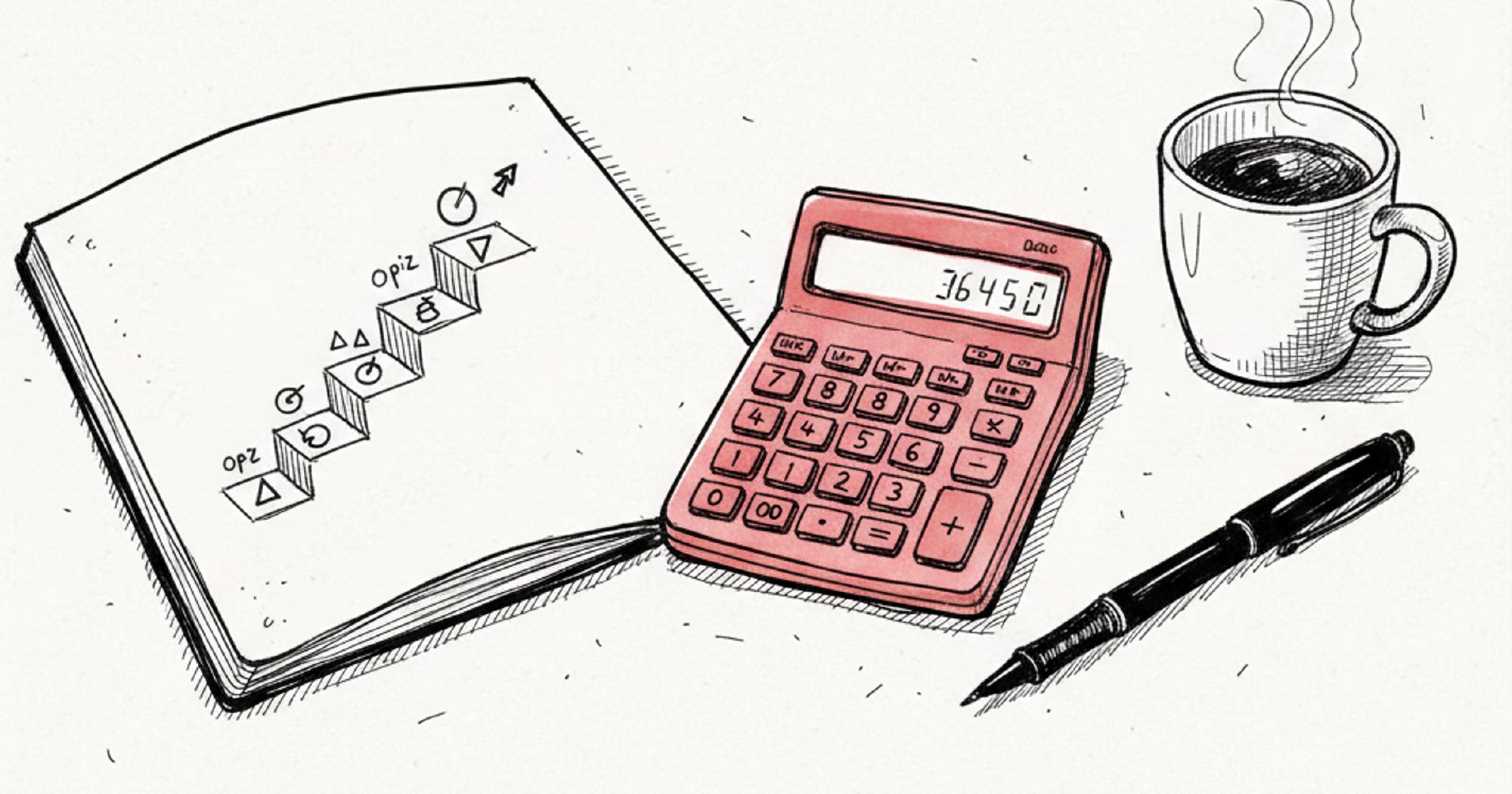
Step 1: Cash-Secured Puts (Start Here)
This is where every premium seller should begin. You sell a put on a stock you'd happily own, collect premium, and either keep the cash or buy the stock at a discount. Low approval level, no margin, easy to understand. Master this before moving on.
Step 2: Covered Calls
Once you own 100 shares (whether from assignment or just buying them), you sell covered calls against them to generate income on stock you already hold. It's the mirror image of selling puts. Same low approval level, same beginner-friendly risk profile.
Step 3: The Wheel Strategy
Combine the first two and you have the wheel strategy: sell puts until assigned, then sell covered calls until the shares get called away, then repeat. It's a complete income system, and it's the core of how I've generated $33,000+ in documented profit. This is the destination for most beginners.
Step 4: Credit Spreads (Once You're Experienced)
When you're comfortable and approved for Level 3, defined-risk strategies like put credit spreads let you sell premium with far less capital. My SPY put credit spread strategy has returned 265% since 2019. But spreads add complexity—don't rush here. Build your foundation first.
Common Beginner Mistakes (With Real Dollar Amounts I Lost)
I've made every one of these mistakes. Learn from my losses so you don't have to repeat them.
1. Buying Options Instead of Selling Them
The original sin. In my early years I bought calls and puts and slowly bled my accounts to nothing. I was right about the stock plenty of times and still lost, because the move wasn't big enough or fast enough. If you take one thing from this guide: sell premium, don't buy it.
2. Selling Puts on Stocks You Don't Want to Own
I once chased a fat premium on Intel (INTC) without respecting how shaky the fundamentals were. The stock dropped, I got stuck, and I lost $555 across those trades. The lesson: a juicy premium means the market expects a big move. Only sell puts on companies you'd genuinely be happy to own.
3. Trading Through Earnings
Earnings reports cause violent, unpredictable overnight moves. Beginners get lured in by the inflated premiums right before earnings—and get blown up when the stock gaps 20%. Avoid holding short options through earnings until you have real experience.
4. Over-Concentrating in One Position
With a small account, it's tempting to dump everything into one stock for maximum premium. Don't. If that single stock craters, you have no capital left to recover or diversify. Never risk more than 30% of your account on one position.
5. Selling Weeklies for "More Income"
Weekly options decay faster, which sounds great—until a stock blows through your strike with no time to react. The gamma risk is brutal for beginners. Stick to 30–45 day expirations until you have experience and capital to spare.
6. Having No Exit Plan
Decide your exit before you enter. What will you do if the stock drops 10%? Will you roll, take assignment, or close? Making that decision in advance, while you're calm, is what separates disciplined traders from panicked ones.
Frequently Asked Questions About Options Trading for Beginners
What does "selling premium" mean in options trading?
Selling premium means you sell an options contract and collect cash (the premium) up front in exchange for taking on an obligation—like agreeing to buy 100 shares at a set price. Instead of betting on a big stock move like an option buyer, you profit as the option loses value over time, keeping the premium if it expires worthless.
Is selling options safer than buying options?
For beginners, yes—when you stick to cash-secured puts and covered calls. Buying options means you need to be right about direction, magnitude, and timing all at once, and roughly 75% of options held to expiration expire worthless. Selling premium puts you on the winning side of that statistic and lets time decay work for you instead of against you.
Can you trade options with little money?
Yes. You can sell a cash-secured put on an affordable stock under $25 with as little as $1,500–$2,000 in your account. The catch is that smaller accounts generate smaller income, so the early goal is building good habits, not getting rich.
How much money do I need to start trading options?
You can technically start with $2,000, but $5,000 is a more realistic minimum for selling cash-secured puts on affordable stocks. With $5,000 you can run one or two positions and still keep a cash reserve. See my small account guide for a complete breakdown.
Is selling options risky for beginners?
Cash-secured puts and covered calls—the strategies I recommend for beginners—are among the lowest-risk options strategies, which is why they sit at the lowest approval level. You're fully backed by cash or stock you already own. The riskiest options strategies involve buying options or selling naked options, neither of which a beginner should touch.
Can I trade options in my IRA or Roth IRA?
Yes. Most brokers allow cash-secured puts and covered calls in IRA accounts, and a Roth IRA is arguably the best place to sell premium because the income grows completely tax-free. You can't use margin in an IRA, but since these strategies are fully cash-secured anyway, that's not a limitation.
How long does it take to learn options trading?
You can understand the mechanics of selling a cash-secured put in an afternoon. Becoming consistently profitable takes a few months of paper trading and real reps. The good news is the premium-selling approach is far more forgiving than directional trading, so your learning curve costs you less.
Should I buy an options trading course as a beginner?
Not on day one. Read free guides, paper trade, and place a few small real trades first. Once you've decided premium selling is for you and you want to accelerate—with a structured curriculum, real-time trade alerts, and a community—a course is worth it. I compare the options honestly in my best options trading course guide.
Final Thoughts: Start by Selling, Not Buying
Every beginner guide tells you to buy a call and bet on a stock going up. I'm telling you to do the opposite, because I spent years learning the hard way that buying options is a losing game for most people. Selling premium turned my trading around—the same statistics that worked against me as a buyer started working for me as a seller.
Start with a cash-secured put on a stock you'd love to own. Paper trade it first. Keep your positions small. Track everything. Follow the learning path from cash-secured puts to covered calls to the full wheel strategy. Do that consistently and you'll build something most options traders never do: a repeatable income engine instead of a string of lottery tickets.
When you're ready to go deeper, I publish every trade I make on Options Cafe, and the course walks you through the entire system with real-time alerts so you can learn by watching me trade real money. But there's no rush. The free guides linked throughout this post will take you a long way. Start small, sell premium, and let time decay do the heavy lifting.
Ready to learn options trading?
Start learning how to successfully trade options to earn monthly income.
Related Topics: Options Trading for Beginners, How to Start Trading Options, Selling Options Premium, Cash Secured Puts for Beginners, Options Income Strategy, Beginner Options Trading Guide, Covered Calls for Beginners, Options Trading Basics, Theta Gang for Beginners, Wheel Strategy Beginners