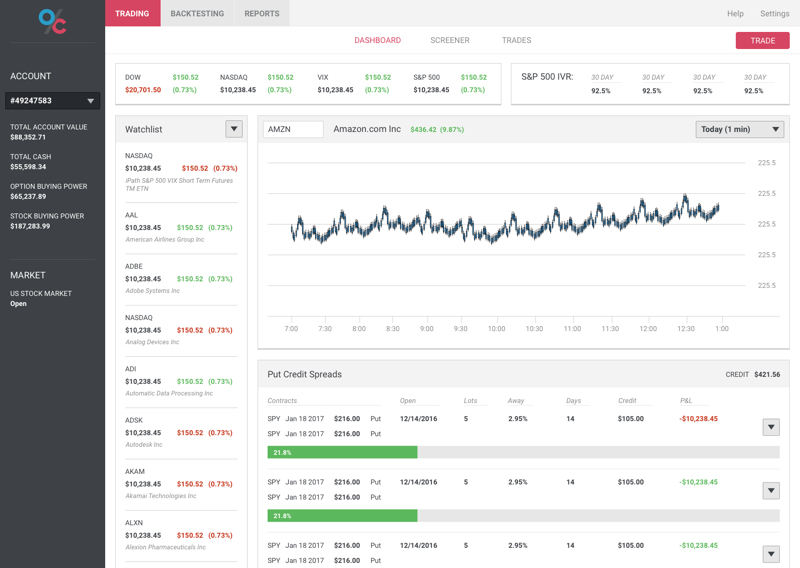
Many people think day trading is gambling: you might win for awhile, but eventually you will blow up your account. I agree—yet I day trade the SPY almost every day. Day trading is part of my overflow method and multiple strategy approach to managing my portfolio.
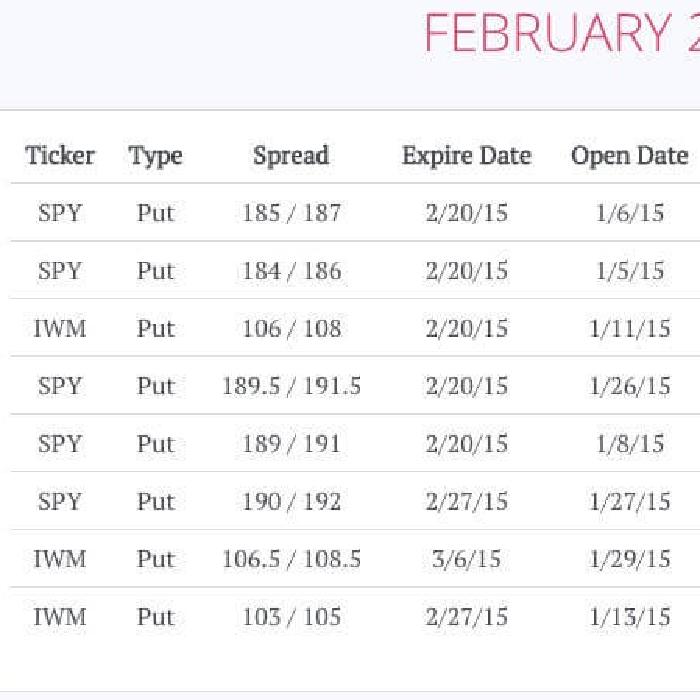
Here we explore the put credit spread trades I placed on the SPY durning the month of February 2015. This is my primary trading strategy for monthly income. By trading put credit spreads on the SPY I am typically in a trade for 23 days but no more than 45 days.
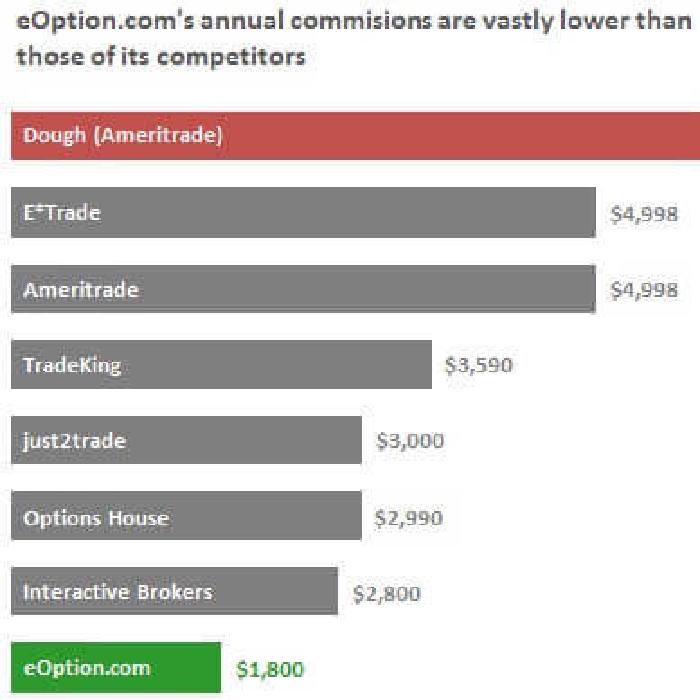 eOption.com has the cheapest commissions I have found for trading credit spreads, and lowering your trading costs is essentially a risk-free way to add returns.
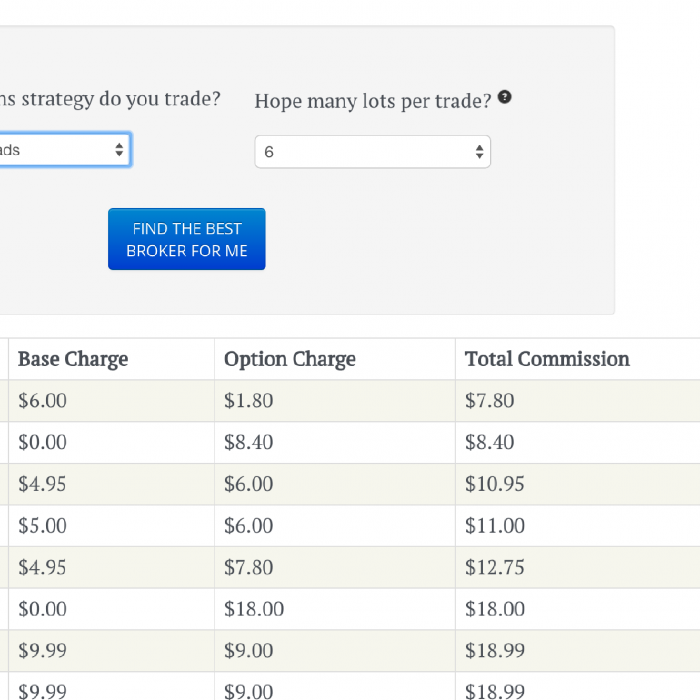 No single broker is cheapest for every options trade, so I built Broker Finder to compare commissions based on your strategy and lot size per trade.
When I got interested in trading credit spreads, like most I harbored some skepticism. A credit spread trade seemed to be the type that works—until rather dramatically it does not. Then I set off to figure out the correct way to trade SPY put credit spreads. The path was familiar: backtesting.

When I talk to people about my credit spread trading strategy I often hear the claim that credit spread trading works great for 5, 10, or 20 thousand dollars, but the strategy can’t be scaled up. Are these skeptics suggesting a lack of liquidity to fill bigger orders?
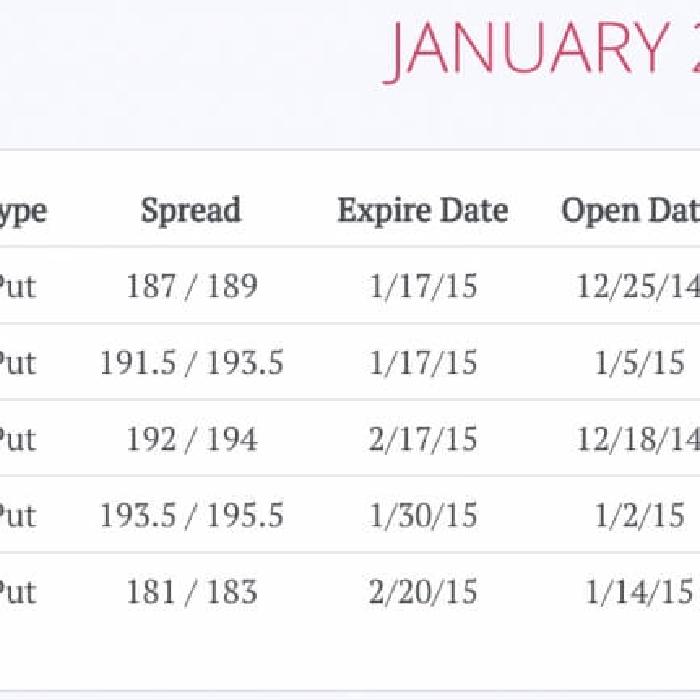
Here we explore the put credit spread trades I placed on the SPY durning the month of January 2015. This is my primary trading strategy for monthly income. By trading put credit spreads on the SPY I am typically in a trade for 23 days but no more than 45 days.
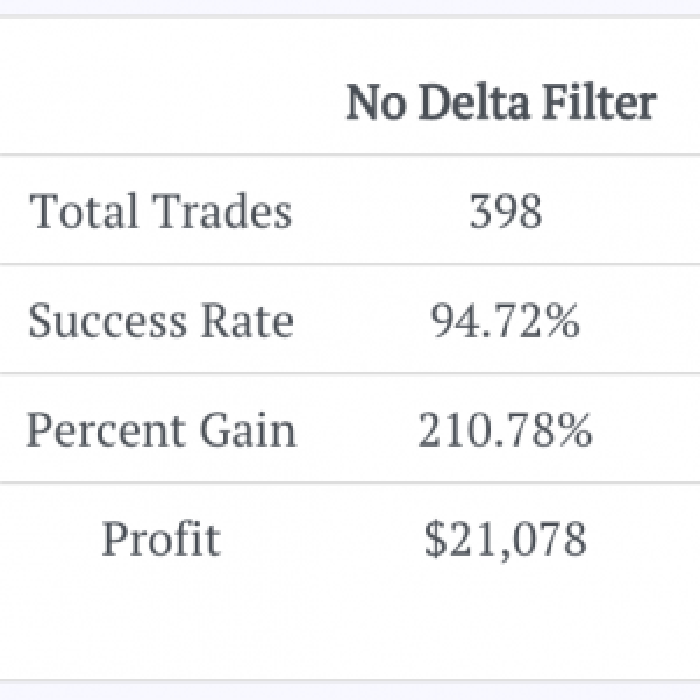
To study how delta affects an opening trade I did—of course—some backtesting. I took a $10,000 account and placed put credit spread trades from 2011 to current. I opened up spreads that were $2 wide, at least 4% out of the money, and no more than 45 days to expiration.

Almost all of my credit spread trading is focused on the S&P 500 via the SPY or S&P 500 futures. Why am I hyperfocused on the SPY? So I can sleep at night (well, try to sleep—I do have a young son and a daughter on the way).

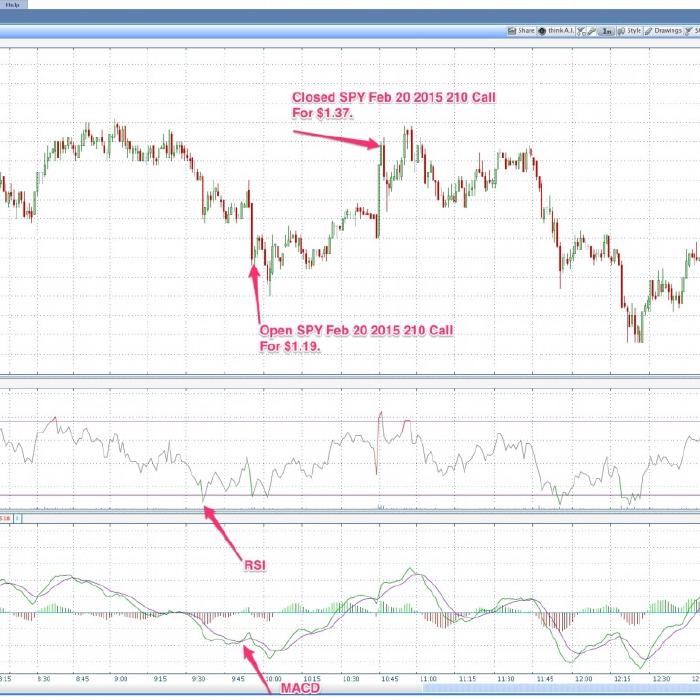
Every great trader has a bag of tricks. Each of these opportunities, if you will, is a predefined market condition signaling when to enter a trade and when to close it. One that has been in my bag for awhile is buying the SPY when the Relative Strength Index (RSI) indicator hits 30.