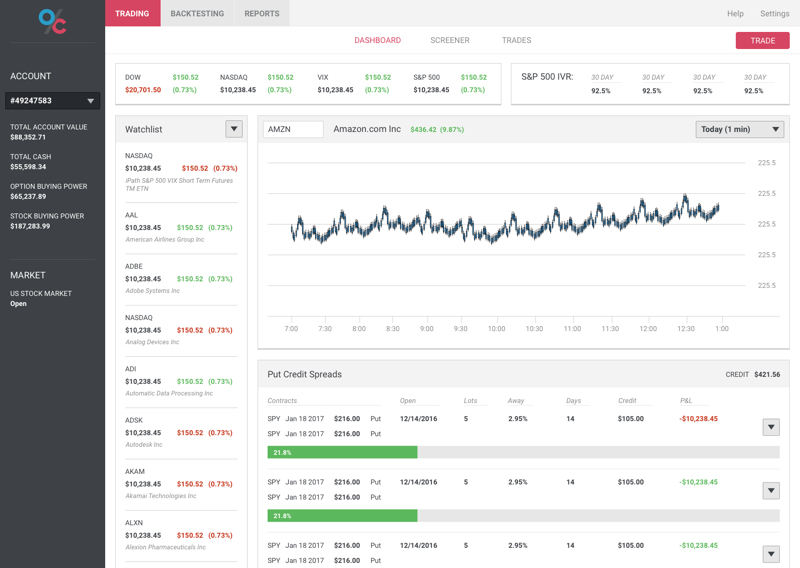
After 10 years I still can’t fully tame my emotions, which is why I rely on mechanical, rule-based trading over emotional decisions to stay consistent.

The day I learned to pay attention to volatility was the day I started to be consistently profitable in options trading. Most options traders start out trading stocks and they learn that if a stock is associated with good news its value often increases, whereas bad news sends a stock down.
 The SPY fell 5% or more in a 30-day period only 11% of the time from 1993 to 2014, and I explain why this data is the foundation for put credit spread strategies.
By my best calculations, going back to my piggy bank years, my personal spending has increased by 10% annually—and my assumption is that I will continue shelling out at this rate well into the future. Sure, I am a spender, but when you really think about it 10% is not crazy.
 I run four strategies at once for diversification, and here is why a multiple-strategy approach keeps you engaged and smooths returns across changing markets.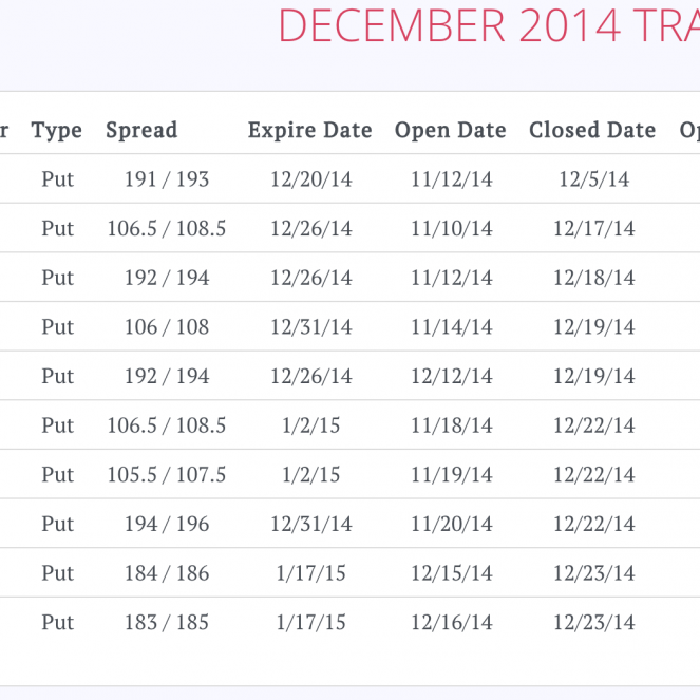
Here we explore the put credit spread trades I placed on the SPY durning the month of December 2014. This is my primary trading strategy for monthly income. By trading put credit spreads on the SPY I am typically in a trade for 23 days but no more than 45 days.

I love this time of year: vacation, family, drinks, parties, gifts, Santa, and the rest are all great. Almost equally I love this time of year because I am reminded to take time to reflect on the past year, which gives me an opportunity to map a game plan for the coming year.

The catch is if your strategy is not well planned or implemented with discipline. Meaning that what makes the 3 factors so definitive when trading credit spreads is implementing a brilliant strategy with fidelity.
 I explain what a put credit spread (bull put spread) is using an insurance analogy and real numbers, plus when to use this income-generating strategy.
 A beginner’s guide to put options that uses a simple laptop analogy and real stock examples to explain how traders use puts for protection or profit.