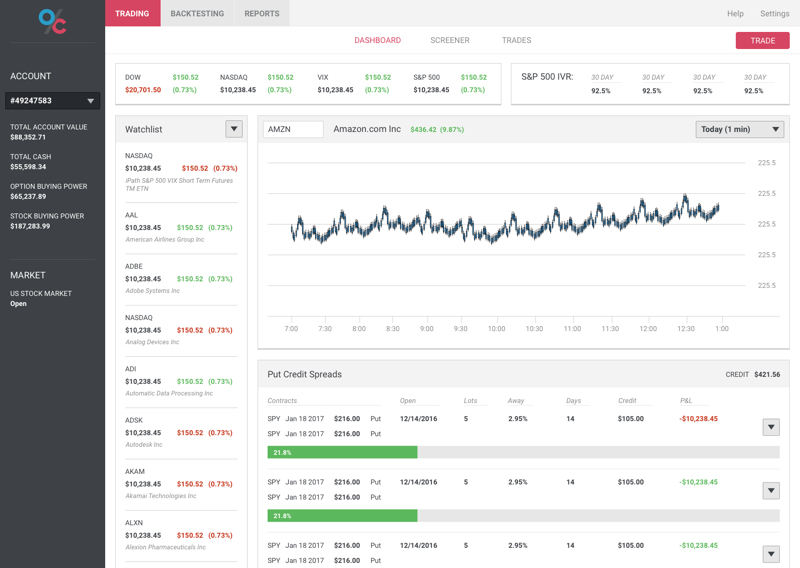
If you want a single options strategy with a high win rate, defined risk, and the ability to generate consistent monthly income—here's a SPY put credit spreads strategy worth a hard look. It's a rules-based approach I've run for years, and the numbers back it up: 156 trades, 91%+ win rate, and a 42.33% return in 2025 (after one of the worst Q1 drawdowns I've ever traded through).
This isn't a definition post. This is a complete playbook for trading SPY put credit spreads—entry rules, exit targets, position sizing, how to handle losers, and the full 2025 story where the strategy almost got away before coming back stronger. Everything on this page is backed by real trades documented on Options Cafe and a public results page.
What Is a SPY Put Credit Spread?
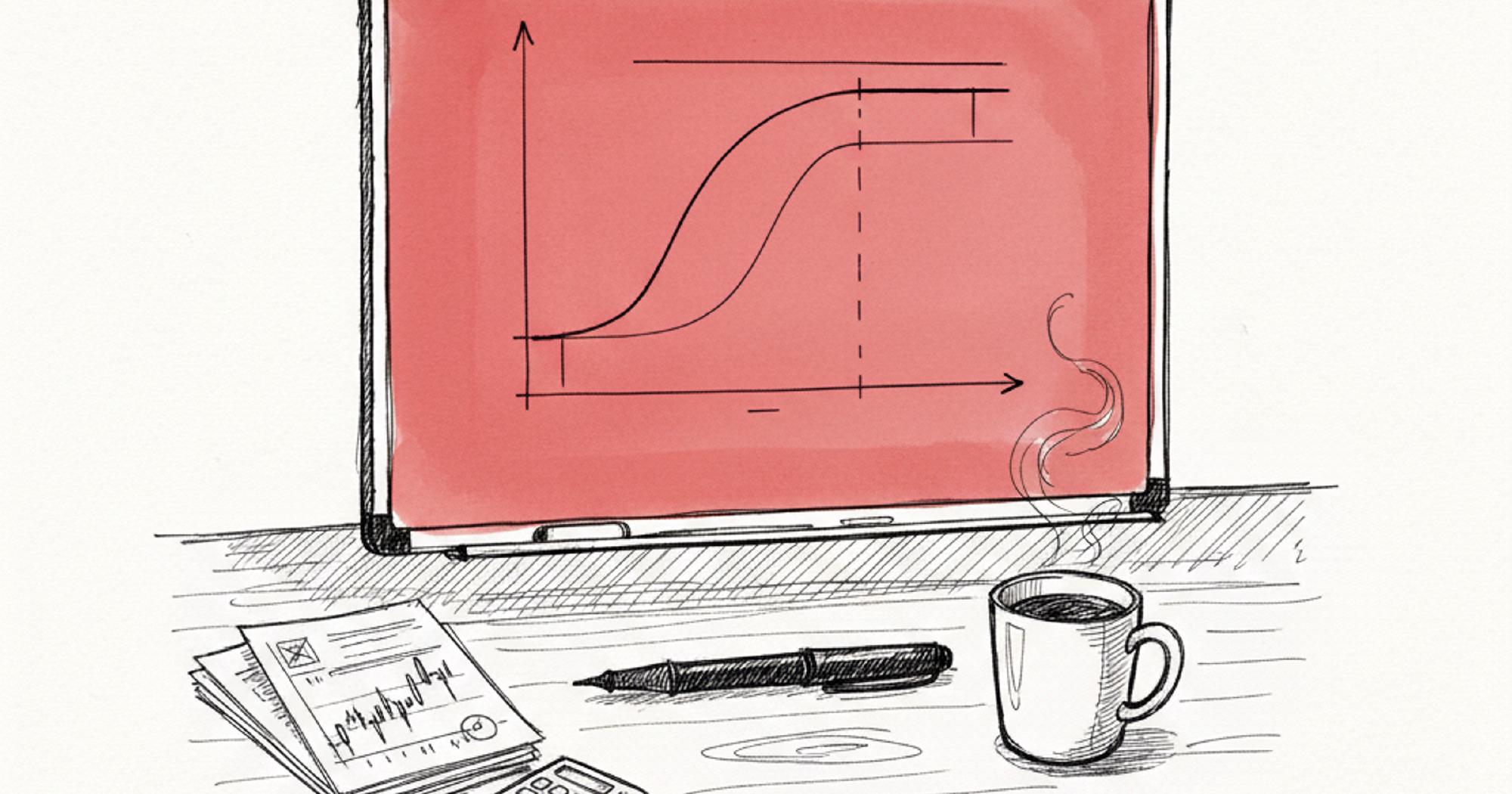
A put credit spread (also called a bull put spread) is a two-leg options trade where you simultaneously:
- Sell a put option at a higher strike price (collecting premium)
- Buy a put option at a lower strike price (paying less premium)
The difference between what you collect and what you pay is the net credit—that's your maximum profit. Your maximum loss is the width of the spread minus that credit. Both options expire at the same time and have the same underlying (in this case, SPY).
Here's a real-world example. Let's say SPY is trading at $580. A trader could open this spread with 30 days until expiration:
- Sell 1 SPY $540 put — collect $2.50 premium ($250)
- Buy 1 SPY $535 put — pay $1.80 premium ($180)
- Net credit: $0.70 ($70)
- Max loss: $5.00 - $0.70 = $4.30 ($430)
- Breakeven: $540 - $0.70 = $539.30
If SPY stays above $540 at expiration, both options expire worthless and you keep the entire $70 credit. That's about a 16% return on the $430 at risk. If SPY drops below $535, you lose the full $430.
The beauty of this setup is that SPY doesn't need to go up to profit. It can drop modestly, trade sideways, or rally—the trade still wins. The only losing scenario is a large, sharp drop past the short strike.
Why SPY Specifically?
You might wonder: why not trade put credit spreads on individual stocks with higher premiums? I've traded credit spreads on stocks before, but SPY keeps winning out for three specific reasons.
1. Statistical Predictability
SPY tracks the S&P 500. Over decades of market data, SPY drops 5% or more in a 30-day period only about 11% of the time. That's a powerful statistic. When you sell put credit spreads 5%+ out of the money with 30 days to expiration, you're trading on the probability side of a well-documented historical pattern.
Individual stocks don't have this kind of statistical regularity. A single stock can drop 20% on bad earnings or a surprise news event. SPY can drop too, but it's an index of 500 companies—diversification smooths the extremes.
2. Tight Options Liquidity
SPY has the most liquid options market in the world. Bid-ask spreads are typically $0.01-$0.03 wide. That means entering and exiting trades without losing significant money to slippage. On less liquid names, the spread can eat 10-20% of your credit before you even hold the trade.
3. No Earnings Risk
Individual stocks move sharply around earnings reports. SPY doesn't have earnings—it just tracks an index. There's no need to pause trading for earnings windows or get caught by surprise moves. The strategy runs continuously.
The Entry Rules

Here are the specific rules that define this strategy. No exceptions, no vibes, just a checklist.
Rule 1: 30-45 Days to Expiration (DTE)
Enter trades with 30-45 DTE. This is the sweet spot for put credit spreads. Time decay (theta) accelerates in this window, which works in the seller's favor. Shorter than 30 DTE and the premium is usually too thin to justify the risk. Longer than 45 DTE and you're exposed to too many market-moving events.
Rule 2: Short Strike at 0.15-0.20 Delta
The short put should sit at a delta of 0.15-0.20. In practical terms, this means there's roughly an 80-85% statistical probability that the option expires worthless (which is the goal). Translated to SPY's current price, that's usually 5-8% out of the money.
Rule 3: $5-Wide Spreads
Use $5-wide spreads almost exclusively. The long put sits $5 below the short put. This creates a defined risk of $500 per contract minus the credit collected. Wider spreads mean more credit but also more risk. It's better to trade more contracts at narrow widths than fewer contracts at wider ones.
Rule 4: Trade Only in Bullish or Neutral Conditions
If SPY is in a clear downtrend (below the 50-day moving average and making lower lows), pause. Put credit spreads are a bullish strategy—the market needs to be going up or sideways. Forcing trades in a downtrend is how most traders blow up. Missing profitable months is better than taking losses in bad conditions.
Rule 5: Position Size at 1-2% of Account Per Trade
No single trade should risk more than 1-2% of total account value. This sounds conservative, but it's what keeps a trader in the game. Even a string of losses can only dent the account by a small percentage, never knock it out. Read this position sizing post for the full math.
The Exit Rules
Entry rules are only half the strategy. How you exit matters even more.
Take Profit at 50% of Max Credit
Close winning trades when they've captured 50% of the maximum credit. If you collected $0.70, close the spread when it's worth $0.35 (buying it back for that amount). This may sound like leaving money on the table, but it isn't. Closing at 50% dramatically increases the annualized return because capital can be redeployed into a new trade instead of waiting for the last few cents.
Manage Losers Before They Get Worse
If the spread goes against you and reaches 2x the credit received as a loss, evaluate. Sometimes closing is the right call, sometimes rolling out in time to give the market a chance to recover is better. The exact decision depends on market conditions and where the short strike sits relative to the current price.
Always Close Before Expiration Week
Never hold spreads into expiration week (the final 5 days). Gamma risk spikes—small price moves create big changes in the spread's value. Close for 80% of max profit a week early rather than risk assignment chaos on expiration day.
Real Results: The 2022-2026 Track Record
| Year | Profit | Trades | Wins | Win Rate |
|---|---|---|---|---|
| 2022 | $370 | 2 | 2 | 100% |
| 2023 | $5,439 | 49 | 47 | 96% |
| 2024 | $4,299 | 36 | 33 | 92% |
| 2025 | $3,259 | 55 | 51 | 93% |
| 2026 (YTD) | $1,858 | 14 | 11 | 79% |
| Total | $15,226 | 156 | 144 | 92% |
The 2025 Story: Drawdown, Recovery, and 42.33% Return

If you only look at the table above, 2025 seems quiet—$3,259 profit, 93% win rate. What the table hides is how that number was earned. 2025 was the year that validated this rules-based approach, and it's worth telling in detail.
Q1: The Brutal Start
The first three months of 2025 were ugly. March 2025 closed down $1,793.28. April 2025 was worse at negative $3,904.80. In a matter of weeks, almost all of 2024's profits were gone. This wasn't a bad trade or two—it was sustained, systematic losses as volatility spiked and the market behaved in ways the standard entry rules didn't fully anticipate.
I wrote about this in detail in the drawdowns post. The short version: I kept trading through conditions where I should have paused, and I paid for it.
The Pivot: Capital to the Wheel
After April 2025, I reduced put credit spread position sizes and redirected capital to the wheel strategy, which is less sensitive to sharp market drops. The spreads didn't get abandoned entirely—just sized down with more selective entries.
The Comeback: May Through December
The rest of 2025 was a steady recovery:
- May 2025: +$1,664 (89% win rate)
- June 2025: +$1,177 (100% win rate)
- July 2025: +$919 (100% win rate)
- August 2025: +$757 (100% win rate)
- September 2025: +$571 (100% win rate)
- October 2025: +$745 (100% win rate)
- November 2025: +$967 (100% win rate)
- December 2025: +$1,063 (100% win rate)
When the dust settled, the SPY put credit spread strategy finished 2025 with a 42.33% annual return on deployed capital. The Q1 losses were real, but the rest of the year proved the strategy still works when the rules get applied consistently.
Managing Losing Spreads (It Will Happen)
Even at a 92% win rate, roughly 1 in 12 trades is a loser. When SPY drops sharply, a short put that was 5% OTM can suddenly be at-the-money or in-the-money. Here are the three ways to handle it.
Option 1: Close Early
If the spread is approaching 2x the credit received as a loss and there's no clear setup for recovery, close. Taking a $1.40 loss on a $0.70 credit isn't fun, but it preserves capital for the next trade.
Option 2: Roll Out
Sometimes the right move is to close the current spread and open a new one further out in time (rolling out) at the same or lower strikes. This gives the market more time to recover. Only roll for a credit—never for a debit.
Option 3: Take the Full Loss
On rare occasions, letting a spread go to expiration makes sense when there's strong conviction the market will recover before then. This is the riskiest choice and should be used sparingly. The defined-risk nature of credit spreads means the worst case is known from the moment the trade is entered—so if the call is wrong, just accept the max loss and move on.
Put Credit Spreads vs. The Wheel Strategy
I trade both SPY put credit spreads AND the wheel strategy simultaneously. They complement each other well, but they solve different problems.
| Factor | SPY Put Credit Spreads | Wheel Strategy |
|---|---|---|
| Risk | Defined (max loss known upfront) | Undefined (stock can drop further) |
| Capital Required | $500 per $5-wide spread | $1,500-$7,000 per position |
| Win Rate | ~92% | ~85-90% |
| Per-Trade Profit | Small ($35-$100) | Moderate ($100-$500+) |
| Loss Size | Capped (max $500 per spread) | Can be significant (stock holder) |
| Best For | Consistent income, small accounts | Stocks you want to own long term |
One approach: use SPY put credit spreads for consistent monthly income on the market as a whole, and use the wheel for individual names you'd be happy to own. They occupy different buckets in a balanced portfolio.
Capital Requirements
You can start trading SPY put credit spreads with less capital than most strategies. A single $5-wide spread requires $500 of buying power (minus the credit). With a $5,000 account, you could reasonably run 3-5 positions at a time, staggered across different expirations.
The catch: smaller accounts need to be especially disciplined about position sizing. A single full-spread loss on a $2,000 account is a 25% hit. On a $20,000 account it's 2.5%. Scale your contract count to your account size—never force trades to fit a target income number.
Trading Put Credit Spreads in an IRA
Here's something most traders don't realize: put credit spreads are allowed in IRAs at most brokers, including Schwab, Fidelity, and Interactive Brokers. You'll need Level 3 options approval, but the spreads themselves are considered a defined-risk strategy suitable for retirement accounts.
Running this strategy in a Roth IRA is a game changer. Every dollar of premium is tax-free. Every winning spread compounds without the IRS taking a cut. If you're going to trade credit spreads anywhere, a Roth IRA is the most efficient place to do it.
Common Mistakes to Avoid
Mistake #1: Selling Too Close to the Money
Higher premiums are tempting. Selling a put at 0.30 delta instead of 0.15 delta nearly doubles the credit. But win rate drops from ~85% to ~70%, and losses get more frequent. Stick with the 0.15-0.20 delta rule no matter how boring it feels.
Mistake #2: Ignoring Market Conditions
The Q1 2025 losses happened largely because I kept trading through conditions where the rules said to pause. When SPY is below the 50-day moving average and volatility is elevated, the statistical edge of put credit spreads deteriorates. The rules exist because the market isn't always a reliable counterparty.
Mistake #3: Oversizing Positions
Scaling up position size after winning streaks is a classic trap. The logic feels right: "if 2 contracts made $200 last month, 4 contracts should make $400 this month." What actually happens is the next loss is 4x instead of 2x. Keep position sizes constant as a percentage of the account, not based on recent performance.
Mistake #4: Not Closing Winners
Letting winning spreads ride to expiration to capture every last cent looks greedy on paper. The problem: a spread that's 80% of the way to max profit isn't worth the remaining 20% of risk. One adverse move can wipe out weeks of gains. Close at 50% and redeploy.
Mistake #5: Trading Through Grief
After a loss, it's tempting to immediately put on another trade to "make it back." That's revenge trading and it doesn't work. Some of the worst stretches come right after losses when traders force entries without waiting for proper setups. Take a break, review what went wrong, and only re-enter when the rules align.
Frequently Asked Questions
How much can I realistically make trading SPY put credit spreads?
With a disciplined approach on a $10,000 account, reasonable expectations are $100-$300 per month on average. That's 12-36% annualized. Results vary by year (this strategy hit 42.33% in 2025, less in other years). Don't plan around the best year—plan around the average.
What broker should I use?
Any broker with competitive options commissions and Level 3 approval works. I've used Schwab, Interactive Brokers, and tastytrade. Schwab and Fidelity are the most beginner-friendly. Interactive Brokers has the lowest commissions but a steeper learning curve.
Is this strategy better than selling individual cash-secured puts?
They serve different purposes. Cash-secured puts require more capital and can result in owning shares. Put credit spreads use less capital, have defined risk, and don't result in stock ownership. Both have a place in a portfolio. Credit spreads are better for pure income; CSPs are better when the goal is to accumulate shares at a discount.
Should I use 0DTE or weekly spreads instead?
This strategy uses 30-45 DTE spreads on SPY. Zero-DTE (same-day expiration) SPX spreads are a separate approach—higher frequency, different risk profile. I've written about zero-DTE trades separately. Weekly spreads offer less premium for the same risk, so they're not part of this system.
What happens if SPY gaps down 10% overnight?
Your spreads will instantly be at or past max loss. This is the worst-case scenario and it's why position sizing matters. The defined-risk nature of credit spreads means you can't lose more than the spread width minus credit—that's baked into the strategy. A sharp gap down hurts, but it won't wipe out your account if you're sized properly.
— Spicer
Ready to learn options trading?
Start learning how to successfully trade options to earn monthly income.
Related Topics: SPY Put Credit Spreads Strategy, Put Credit Spreads, Put Credit Spreads for Income, Bull Put Spread, SPY Options Strategy, Options Income Strategy, Credit Spreads, Options Trading, Premium Selling, Monthly Income Options